

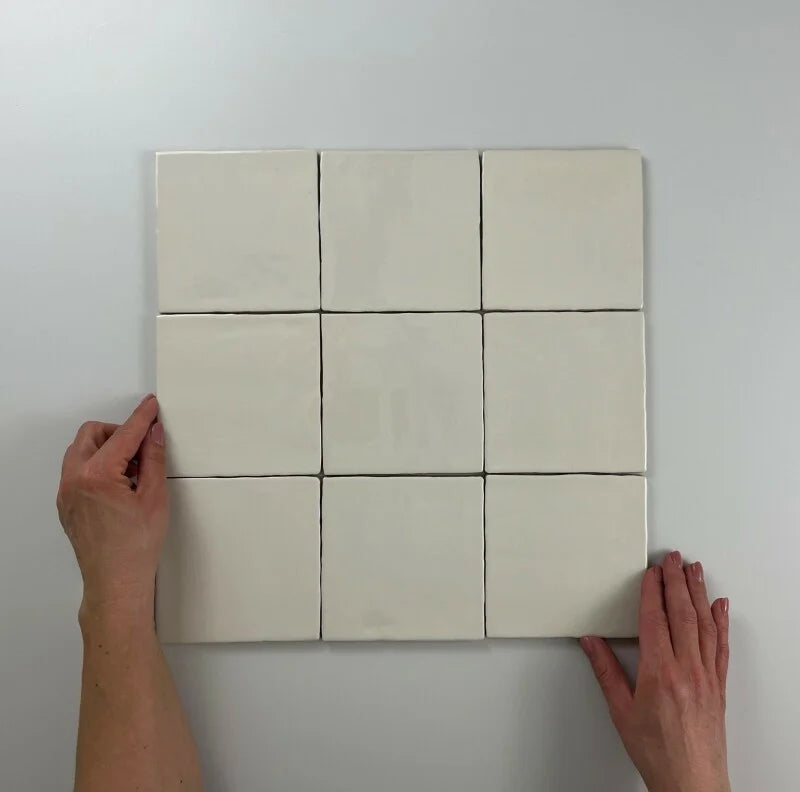


You degrease tiles by first removing loose dirt, then cleaning them with warm water, and finally using a suitable degreaser or tile cleaner. This is especially important when you want to glue, caulk, or paint tiles. Grease, soap residue, dust, dirt, limescale, and old cleaning layers can cause tile adhesive, sealant, or tile paint to adhere poorly.
A tile may appear clean to the eye, yet still have a thin layer of dirt or grease on it. This is common, especially in bathrooms, kitchens, and high-traffic areas. With the right preparation, you can prevent paint from peeling, sealant from not adhering properly, or glue from making less contact with the surface.
Why is degreasing tiles important?
Tiles are often smooth and dense in structure. This is especially true for ceramic tiles. As a result, dirt and grease do not always penetrate deep into the tile, but remain as a thin layer on the surface. This layer can be almost invisible, but it does affect adhesion.
Grease, skin oils, cooking residue, soap residue, limescale, dust, and remnants of cleaning agents form a separation layer between the tile and the product you want to apply. Tile adhesive, sealant, primer, or paint must make good contact with the tile surface. If this does not happen, the end result may be less smooth, less strong, or less durable.
Good preparation therefore prevents many problems. Those who degrease tiles properly ensure a clean, dry, dust-free, and grease-free surface. This is the basis for gluing, caulking, and painting.
Degreasing tiles: step-by-step plan
Do you want to know how to degrease tiles in the correct order? Then use the step-by-step plan below as a practical guide. Always adapt the chosen product to the type of tile and follow the instructions on the packaging.
- Remove loose dirt and dust. Use a vacuum cleaner, soft broom, or dry cloth. This prevents dust and sand from being spread over the tile during cleaning.
- Clean the tiles with warm water. This helps to loosen light dirt, dust, and superficial residues.
- Use a suitable degreaser or cleaner. Choose a product that suits your tile type and application. Always check the label.
- Scrub or wipe the tiles thoroughly. Use a clean cloth, sponge, or soft brush. Work in sections so that loosened dirt does not dry again.
- Rinse thoroughly with clean water if the product requires it. Many cleaners need to be rinsed or wiped off so that no residue remains.
- Allow the tiles to dry completely. Do not glue, caulk, or paint as long as the surface is still damp.
- Check the surface. The tiles must be clean, dry, dust-free, and grease-free before you proceed.
Always test a degreaser first in an inconspicuous area. This way, you can see if the product is suitable for the tile, grout, and any finish.
How to degrease tiles for gluing?
Degreasing tiles for gluing is important because tile adhesive needs to make good contact with the surface. If there is grease, dust, limescale, or old soap residue on the tile, the adhesive may adhere poorly. This is especially important when you want to place new tiles over existing tiles.
First, clean and dust-free the tile surface. Then degrease with a suitable cleaner and rinse if the product requires it. Then allow the tiles to dry completely. The surface must be clean, dry, flat, dust-free, and grease-free before applying tile adhesive.
Also, always check the instructions for the tile adhesive. Not every adhesive is suitable for every surface or application. If in doubt, it is advisable to ask for advice before you start.
How to degrease tiles for caulking?
Sealant only adheres well to a clean, dry, and grease-free surface. In bathrooms and kitchens, there are often soap residues, skin oils, limescale, moisture, and remnants of old sealant on or along the tiles. If you caulk directly over this, the sealant joint may come loose more quickly.
Therefore, first remove all old sealant. Then clean the tile edges thoroughly and use a suitable degreaser or cleaner. Work precisely along the edges where the sealant needs to adhere. Then allow the surface to dry completely before applying new sealant.
Moisture or dirt under the sealant can lead to poor adhesion and promote mold growth. Therefore, always follow the instructions on the sealant packaging and do not use a cleaner that leaves a greasy film.
Should you degrease tiles with ammonia?
Ammonia is sometimes used for degreasing, but it is not always the most pleasant or safest choice for consumers. The product has a strong odor, must be used with good ventilation, and should never be mixed with other cleaning agents.
For many jobs, milder or more specific degreasers and tile cleaners are available. These are often easier to use and better suited for the application, such as degreasing tiles for painting, caulking, or gluing.
Do you still want to use ammonia? Then wear gloves, ventilate well, follow the label carefully, and always test first in an inconspicuous area. Never use it in combination with other products.
How to degrease tiles for painting?
Degreasing tiles for painting is extra important. Paint adheres poorly to grease, limescale, soap residues, or old shiny cleaning layers. If the surface is not properly prepared, tile paint may dry blotchy, look less smooth, or peel off more quickly.
Start with cleaning and degreasing before possibly sanding or dulling. This prevents grease or dirt from getting into small sanding scratches. Allow the tiles to dry completely after degreasing. After that, depending on the paint system, light sanding or a primer may be necessary.
Always follow the procedure of the tile paint, primer, or lacquer you are using. Also, pay attention to the drying time. A tile may appear dry on the surface, while grout or edges still retain moisture.

What products can you use to degrease tiles?
For many tile jobs, a suitable degreaser, tile cleaner, or mild cleaning agent is sufficient. The most important thing is that the product matches the type of tile and what you want to do next. Cleaning tiles for gluing, for example, requires a grease-free, load-bearing surface. Cleaning tiles for caulking primarily requires clean, dry edges.
Ceramic tiles are usually easy to clean and degrease. They are strong, easy to maintain, and widely used as floor and wall tiles. Nevertheless, it remains important to follow the instructions of the cleaning agent and rinse thoroughly when necessary.
With natural stone or delicate tiles, you need to be extra careful. Some materials and finishes cannot tolerate aggressive or acidic products. Old tiles with wax layers, glossy layers, or a lot of cleaning residue may sometimes require a stronger or more specific cleaner. In bathrooms and kitchens, removing soap residues, skin oils, and cooking grease is particularly important.
What mistakes should you avoid when degreasing tiles?
A common mistake is only cleaning with water when grease, soap residue, or cleaning layers are present. Water removes loose dirt, but does not always make a tile grease-free. Not rinsing properly can also cause problems, as cleaning residue can remain on the tile as a new layer.
Also, don't start gluing, caulking, or painting too quickly. The surface must be completely dry. Moisture can impair adhesion, especially for caulking and painting. Also, do not use overly aggressive products if not necessary, and never mix ammonia with other cleaning agents.
Another mistake is skipping a test in an inconspicuous area. This is especially important for natural stone, delicate finishes, grout, and old tiles. Furthermore, always remove dust and loose dirt first, so you don't create a smear layer during cleaning.
Are ceramic tiles easy to degrease?
Ceramic tiles are generally easy to clean and degrease. They have a strong, low-maintenance structure and are suitable for many spaces, such as bathrooms, kitchens, living rooms, and toilets.
However, even with ceramic tiles, the surface must be clean, dry, dust-free, and grease-free before you glue, caulk, or paint. Especially with wall tiles in the kitchen, bathroom tiles in the shower, or floor tiles that are heavily trafficked, a thin layer of grease or dirt may be present.
At WDTegels.com, you will find a wide range of ceramic tiles for floors, walls, bathrooms, kitchens, and other spaces. By choosing the right tile and maintaining it properly, the surface remains practical to use and suitable for the application you have in mind.
Conclusion: how to best degrease tiles?
Degreasing tiles begins with good preparation. First, remove dust and loose dirt, clean the tiles with warm water, use a suitable degreaser or tile cleaner, and rinse if the product requires it. Then allow the tiles to dry completely.
For gluing, caulking, and painting, a clean, dry, dust-free, and grease-free surface is essential. Always follow the instructions on the packaging of cleaning agents, tile adhesive, sealant, primer, or paint. If in doubt, always test in an inconspicuous area first. This reduces the chance of adhesion problems and helps you achieve a smooth and reliable end result.
FAQ
How do you degrease tiles?
First, remove dust and loose dirt. Then clean the tiles with warm water and a suitable degreaser or tile cleaner. Rinse if the product requires it and allow the tiles to dry completely.
How do you degrease tiles for gluing?
Clean, dust-free, and degrease the tiles before applying tile adhesive. The surface must also be flat and completely dry. Always follow the instructions for the tile adhesive.
How do you degrease tiles for caulking?
Completely remove old sealant, clean the tile edges, and degrease them with a suitable product. Allow everything to dry thoroughly before applying new sealant.
Should you degrease tiles with ammonia?
Sometimes, but ammonia is not always the best choice. It has a strong odor, requires good ventilation, and should not be mixed with other products. A suitable tile degreaser is often more practical.
How do you degrease tiles for painting?
Degrease the tiles before sanding or dulling. Allow the tiles to dry completely and then follow the instructions for the tile paint, primer, or lacquer you are using.


